Thursday, March 16, 2017

Love IS our Doctrine

You can wander into any Unitarian Universalist congregation and find different beliefs - even among the first ten people you meet. There are some UU congregations that are primarily secular. Some UU congregations are primarily Pagan or Earth-Centered. Some are primarily Christian. It is the goal of most (and hopefully all) that even where a majority may be of a particular leaning, anyone can feel and be accepted. This is because of a commonality among UUs: our doctrine is Love. 

When many of us in the UUA hear that term, doctrine, some may have a response in which the muscles in one's face may tend to tighten. For those of us who have fought hard to escape dogmatic views where we may have surrendered to spoon-fed doctrines, the beauty of UU is that we have a more simplistic understand that speaks to probably the greatest universal truth: Love. 

Doctrine comes from the Latin word doctrina which originally had a meaning of instruction or teaching. One of the definitions, according to the Merriam-Webster Dictionary states it as "a principle or position or the body of principles in a branch of knowledge or system of belief." And while that is generally applied to dogmatic thinking, in UU we use this term as a tenet of our universal faith to describe our devotion to Love toward the human spirit. Instead of being bound to rules, we are called into action by truly loving each person. 


We live in a difficult time. I am deeply affected by the orders by the 45th President of the United States in the edict to ban Muslims from particular countries and regions from entering the U.S. I am bothered at his need for building a wall. I am bothered at his administration's very "white power" persona. It bothers me tremendously and I am waiting for the other shoe to drop...because it will. These actions of targeting people because of their religion and the color of their skin is upsetting to UUs because it violates our doctrine of Love. It is upsetting to us because it violates our first, second, sixth and seventh principles. 

There is a big responsibility in our congregational covenant. It is not just intended for those who congregate within the walls of every independent fellowship. It is a call to action to those on both sides of the wall. Let's revisit this covenant: 
Love is the doctrine of this church,
The quest of truth is its sacrament,
And service is its prayer.
To dwell together in peace,
To seek knowledge in freedom,
To serve human need,
To the end that all souls shall grow into harmony with the Divine-
Thus do we covenant with each other.
What if we were to see our neighborhoods, our homes, our hearts as this church? How might that translate on a more global scale? What if we were to seek out truth in various areas where our neighborhoods are located, with those we may dwell with in our homes, or the full examination of our hearts? How might you do service in each of those areas? What if we were to dwell together in peace in our neighborhoods, in our homes, in our hearts? What if we were to seek knowledge in freedom in these areas? What if we were to serve the need of each person - truly serving the needs of each person - in our neighborhoods? What if we were to truly serve the needs of those dwelling with us in our homes? By doing these actions, wouldn't that allow each of us to grow in harmony with the Divine? Could we build this covenant with our church without walls? 

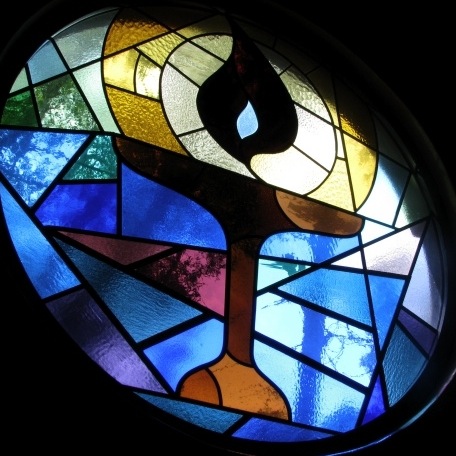
There is a big responsibility in our congregational covenant. It calls us to truly live our lives in covenant with our global family. It gives us the opportunity to reach beyond the pews. It gives us the opportunity to truly carry the flame from the chalice out into the world every day and every moment of the day. 

So, I invite you to examine your heart in this moment and think of some creative and definite ways that you may live out this covenant with non-UUs. How can you coexist in a world that may not see things the way that UUA (as a whole) sees things? How can you coexist in a world that the 45th President seems to want to destroy? How can you coexist with a people who want to remove those who belong to a certain religion or skin tone? I invite you look deep within the chasm of your heart for this well of love, this doctrine, this universal teaching, that you may be inspired to share it with others. 

Namaste/Shalom/Blessed Be! 


Sunday, March 12, 2017

Principle People


Every day, it happens: I have the awesome opportunity to achieve the First Principle in my UU faith. And every day I manage to rip it to shreds. It doesn’t matter how hard I try.

The truth is that there are just some real jerks out there in the world that really challenge me. Before I know it, I have spent energy within myself on anger, refusing an individual based on how I perceive him/her, and even the energy of forgetting one of the Principles I am called to uphold.


I am not a literalist in many ways. For instance, as one who was brought up in the Christian tradition, I do not read the Bible through a literal lens but rather through a literate or metaphorical lens. Therefore, I also treat my situation of messing up the opportunity to uphold First Principle not as a “better luck next time,” but more like I am not bound by it due to my humanness. Just as each of us are capable of being jerks (and I’ll admit I have been one before), so too are each of us capable of rising to the occasion of accomplishing First Principle.

One of my favorite UU Apps, called Illuminations, has a section where it lists all 7 principles of our faith in short form. All I have to do is whip my phone out, pull up the app, go to the principles – and right there: “Each person is important.”


 How simple is that? Apparently not simple enough. The truth is that our humanness gets in the way and builds a barrier between ourselves and the rest of the world. We fall prey to stress, forgetfulness, the day to day tasks, and even the mundane, which all comes at a cost.

Each person is important. Each person is part of the First Principle:
the homeless person
the junkie
the jerk
the conservative zealot
the radical preacher on the street corner
the woman living on food stamps
the wealthy man in his shiny, new BMW.

And so I ask myself, “Who are they to me?” Strangers? Friends? Nobodies? I will tell you who they are. All of these are Principle People. 

Tuesday, March 7, 2017

Amid All The Noise In Our Lives

This is a UU meditation written by Rev. Tim Haley that I absolutely love:

A
A
Amid all the noise in our lives,
we take this moment to sit in silence --
to give thanks for another day;
to give thanks for all those in our lives
who have brought us warmth and love;
to give thanks for the gift of life. 
We know we are on our pilgrimage here but a brief moment in time. 

Let us open ourselves, here, now,
to the process of becoming more whole --
of living more fully;
of giving and forgiving more freely;
of understanding more completely
the meaning of our lives here on this earth.

Source: 1997 UUMA Worship Materials Collection

Sunday, March 5, 2017

Grounded in the Community that is the Congregation

A Short Testimony 
For those of us who are fortunate to do so, we see our UU congregation as our Tribe. That is the term I refer to when I speak of my UU family at Pathways Church in Hurst, Texas. I was at Pathways for a little over a year and then when my spouse and I bought a home in another part of the Dallas/Fort Worth metroplex I began attending another UU that was just up the street from our new house. I was at the other church for about a year but it was really hard to connect with the people there - just from my standpoint despite how lovely many of them are. I was really missing the connections that I made at Pathways. I made the decision to return to that congregation and have been so happy ever since. 

I tell you this because it really does matter where you claim your community. Not everyone is fortunate is have more than one UU congregation as an option in his or her geographic location. Theoretically, I could attend any 9 of the UUs in the Metroplex. Some of them I have visited. It is Pathways that has called me back and has allowed me to graciously call home. I refer to the lovely people therein as my 'Tribe' (which I have lovingly borrowed from a dear friend who also attends Pathways). 


Grounded in Community
I admitted today at Pathways before a group that the people there keep me grounded. I am grounded by their stories, their unique experiences, their individual beliefs, the functionality of the community. I am grounded by how much care and concern they place into every service and into the attention they give to the children and children's programs. I am grounded by how the people at Pathways intentionally see the sacred in each person who enters into the physical structure as well as those we come in contact with on the street. It is something that calls me to rejoice in time and time again. 

The great social activist and journalist Dorothy Day once said "We have all known the long loneliness, and we have found that the answer is community." I am a strong believer in community. I am a strong believer in the ideals and values that each community imbues among those who are both members of and receivers of such. It is in community that we learn that we can overcome our struggles through teamwork and build bridges to hope and trust where canyons of despair may lie. 

This long loneliness that Day speaks of may resonate with several of us where our religious lives are concerned. I can say that when I was a minister in another denomination I did feel lonely - not truly able to speak the way I wanted to speak or share belief as I did/do believe. Even in other UU congregations where I just didn't "fit" with the already existing congregants there was loneliness. When we find our community, our Tribe, we see the ray of hope and the clouds begin to pull away. 

Coexisting in the UU Community
The joy of coexisting in a community that the Unitarian Universalist Association has created is that there is no judgement inside the walls. You will not be (or should not be) judged for your individual beliefs or non-beliefs. And while we have all known a few people in congregations who are quick to put down others or groups for believing certain things or in certain ways, our first principle calls us to see and value the "inherent worth and dignity of every person." That principle calls us to see all people as valuable - both inside and outside of the UUA - even that conservative, evangelical Christian cousin of yours that causes your face to tighten at times. 

In this same vein, the third principle bears just as much importance for those within the walls of each UU congregation. This principle which calls us to "acceptance of one another and encouragement to spiritual growth in our congregations" is reminder as free-thinking people and members of a liberal religious organization we do have a commitment and responsibility toward each person. As a spiritual counselor and vested member of the UUA, I have always seen Principle 3 as one of the most important. This is a principle that truly brings us together in the community. It's that principle that reminds me time and time again why I am even here. Why I continue to return. Why I continue to promote the UU faith. Just as I am working hard each day to be true to my personal religious/spiritual beliefs, so too am I working hard to uphold and support and advocate others within my Tribe as each are on his or her journey - and that includes those individuals who float in and out of the congregation's life. 

Getting grounded in a community that has spent years shaping itself and finding a way to help shape others' lives without intrusion not only warms my spirit but reassures me of my personal choices and understandings of my path. This is not to say that the congregation I belong to has not had its share of struggle. All organizations and communities see this as part of the natural order of things. It is because of these struggles and because of these obstacles that have made this community I belong to strong and so able to provide for the spiritual needs of those within its walls - even the transient seekers. 


Your Role in the Equation 
What is it that you are seeking from your UU congregation? What can you provide from your skillset or spiritual path to others there? Is your local UU providing you with the tools to enhance or build upon your path? Are you helping others locate resources as they are seeking such? Are you living into the principles of your UU faith? 

As we ask ourselves the necessary questions that help us to shape community and build upon our spiritual paths, I find that it is important that we allow this to flow very organically and over time rather than insisting it occur all at once. There is more appreciation to the overall construct and mechanics of the very ideas and intentions that are poured into that which makes up community. By this realization, it helps each of us shape ourselves and our spiritual lives as we coexist with others who are doing the same things or striving for such. 

Leverett Saltonstall, the 55th Governor of Massachusetts and U.S. Senator, once said, "I personally have always found the Unitarian faith a source of comfort and help in my daily life." While Saltonstall came from a generation of Unitarians he understood that need and benefit of community that this organization does and can provide. I believe this level of comfort he speaks of is not something that occurs overnight but through living the UU experience and allowing such to take form over time. 

I invite you to that place of stillness where you may reflect on how you are grounded in your community, your faith, your congregation. I invite you to inquire of yourself what opportunities do you seek that may or may not be present at this time. I invite you to be a person of principles and help shape a community / congregation of principles where all people are respected, loved, welcomed and honored - despite each person's personal beliefs, backgrounds, baggage, or even where any person may be headed. I invite you to learn from another and see that truth is found in many forms and truth that is identified by one person may not be the truth for another but we can coexist and build this community of love and service for one another and those who have yet to find us. 

Wednesday, March 1, 2017

I Invite UU To An Observation of Lent

Lent. It is a season among liturgical Christians which marks the 40 days and nights that Christ spent in the desert fasting and praying. Traditionally, Lent has been used as a time when adherents commit to fasting, penance, self denial, a deeper charge to prayer and the like. Lent begins with Ash Wednesday and concludes with Holy Saturday.

When I was growing up in the Episcopal Church, Lent was always a big deal. I remember we would always give up something that we enjoyed during this time (self denial). For some it was chocolate. For others it was television. Then on Sundays, known as feast days, one could enjoy that item she or he gave up. So you could have chocolate for breakfast, lunch and dinner if you so choose if that was what you gave up for Lent.

As a Unitarian Universalist, there are still things that I enjoy and have a fondness for from my Episcopalian and Catholic heritages. While I am not a fanatic about Lent and really stink at "keeping a holy Lent," I do think that there is merit and a lesson that we UUs can draw from this season as part of our Christian lineage.

Lent is a time of really doing some soul searching. It is a time to get truly connected to God in Christianity. In our UU faith, I look at Lent as a time to truly examine my connection to the Principles and Sources. Am I truly living out each of those areas? Can't think of the Principles just right off of the top of your head? Let me remind you. This is what the UUA adopted (and amended):

We, the member congregations of the Unitarian Universalist Association, covenant to affirm and promote:
  • The inherent worth and dignity of every person; 
  • Justice, equity and compassion in human relations; 
  • Acceptance of one another and encouragement to spiritual growth in our congregations;
  • A free and responsible search for truth and meaning;
  • The right of conscience and the use of the democratic process within our congregations and in society at large;
  • The goal of world community with peace, liberty, and justice for all;
  • Respect for the interdependent web of all existence of which we are a part.
 Lent reminds me that each person has value and that I need to look at each person as such - even those that I wouldn't normally associate with. Lent calls me to stand up for justice, fight oppression, and seek out compassion for others in times of chaos and strife - such as helping refugees. Lent calls me to act as a resource for others when they are seeking out their own spiritual path and also living an example of personal path - standing in my personal truth and upholding the UU faith. Lent calls me to be responsible in my free thought - in this quest for such truth and meaning as I shape my personal beliefs and uphold the beliefs of others and this organization. Lent calls me to act appropriate in my congregation, understanding order and processes have their place and also recognizing such processes are also part of social orders as well. Lent calls me to identify and give ear and heart to my global family - rejoicing in victories and standing in the gap where there is turmoil. Lent calls me to mindfulness that I can not exist by myself. I am not an island. I depend on my UU family, my biological family, my global family, plant life, animal life, and all that is contained therein.

For me, Lent is not necessarily a time of giving up something or repenting of sins. For the last 20 years, I have always used this as a time of adding something to my life. This year, I am focusing more on my personal, spiritual life - on bettering my understanding of my path. I want to better understand my Jewish heritage from my mother's paternal family. I want to better explore my Earth-centered leanings. I want to be more involved in UU conferences and events outside of my congregation as well as more involved in the life of my congregation (shout out to Pathways UU!).

Lent is a time of devotion, yes. My devotion this Lent is to seek out my true, spiritual nature and my deep love for the UU faith. While I should do this all year long, this is a special time in which to seek an enrichment - a time set aside unlike any other time - where I can have daily retreats journeying through the Labyrinth of Lent.

Perhaps Lent is not something that is truly examined in the UU Faith, although there are some communities who do acknowledge it. It is an opportunity, however, where we can stop and set aside a special amount of time and energy where we can explore the deeper meaning of what it means to be Unitarian Universalist, or Christian, or Pagan, or Jewish, or Muslim, or even Agnostic. It may even give an opportunity to one to learn a religion one does not know much about - perhaps a religion one might not consider joining or adhering to but one that draws interest. I personally would like to know more about Sikhism.

In this season that is usually viewed as penitential, I am encouraging those who wish to join me to draw closer to the UU Principles and Sources. Get involved in your local UU congregation. Get involved in the community. Get involved in your personal spiritual path. Do more and be more.

Be blessed.
Namaste.

Sunday, February 19, 2017

What Do You Seek?

I am a spiritual person. I love metaphysics, the use of runes and cards, and the mystical interpretation of nature, psychic and medium energies, the quest for the divine, the search for truth in all things. I love liturgical Christianity from my Catholic and Episcopalian roots. I love the mysticism of Celtic paganism and in the green magick of Wicca. I love the essence and wonder of spiritual flow in Native American forms of spirituality. I love the study and meditative response to the Kabbalah. I delight in the human energy and connectedness that Humanism teaches.

As one who truly identifies as ‘universal,’ I look for new opportunities in shaping my path. I love the term seeker. I think most of us who try to be chimed in to our spiritual selves are truly seekers. We may each have different definitions for this term based on our uniqueness and personal experiences. We each may be seeking totally different things – God, a sense of belonging, truth, the meaning of life, to be in total harmony above all things. But we are seekers nonetheless.

I think that is what draws me to Unitarian Universalism. UUism provides me with so many tools and resources to help me shape my path. And just as paths have forks in the roads along with twists and turns, I know that my spiritual path is no different. This is apparent as I was once an ordained Catholic priest (which lasted for four years when I resigned at the age of 32…10 years ago). While I do not regret my becoming a priest – because that was part of my journey then – I also do not regret expressing my underdeveloped path at that time.

Now in my forties, I would like to think that I am more developed spiritually than I was at 28 when I was ordained to the priesthood. Something that I am very interested in as a certified spiritual counselor is helping individuals develop his/her unique spiritual path. Maybe that is what I was shooting for by becoming a priest 14 years ago. I have always cared about people – where they are spiritually, what their rationalization is, and helping them find the tools and resources to strengthen this aspect of their lives.

A very dear friend of mine grew up in the Episcopal Church. We sang together in the choir for a short time. As we were growing older, I found myself in the Orthodox Catholic faith (and sneaking over to a Unitarian Universalist fellowship while in seminary) and she found herself embracing paganism. When our paths crossed again (at a Native American drumming of all places) she asked me if it was possible for her to be both pagan and Episcopalian. “Absolutely!” I exclaimed.

Too often, I feel, we become too exact with what and how one must be regarding religion, spirituality, and the like. I don’t care about rules and qualifying identifiers when it comes to this aspect of my life. I am Earth-Centered, enjoy certain elements from my Christian roots, respect my Hebrew ancestry, and yet hold certain Humanist ideas in the midst of all of this. It works for me. I make no excuse. I know that 20 years from now when I am in my sixties there may be more layers to my spirituality. But that is exactly what it is – mine. I can customize it how I see fit.

Despite my serving as a minister years ago, I truly love being part of a lay-led Unitarian Universalist congregation. I love the organic nature of the parish. I love how we work as a group to decide what types of programs we would like to take shape in the life of the congregation. I love how we embrace all forms of spirituality – whether it be a derivative of religious-based spirituality or that of the human spirit. We truly do covenant together to support one another in our individual journeys – no matter where that may lead. 

One of my favorite mystics of our time, the late ThomasMerton (who was a professed Trappist Monk as well as a teacher in Zen Buddhism) said, “We have what we seek, it is there all the time, and if we give it time, it will make itself known to us.”

I believe Merton’s words to be true. I believe that each of us – whether we be Catholic, or Pagan, or Atheist, or Agnostic, or Muslim – are all on a journey to either perfecting what we know or on a journey to figuring it out. The beauty is that we are in the process and we recognize the process. We allow the process to develop over time. It is not something that takes shape immediately – despite epiphanies or specific moments we may encounter along the way that may bring us immediate inspiration. That is what being a seeker is about, in my opinion.

It is this journey where we create sacred spaces for ourselves. It is this process that we see the temples within each of us being built. Joseph Campbell once wrote “Your sacred space is where you can find yourself again and again.” The beauty of this statement brings an awareness that many of us have felt lost or unsure of particular religious systems or beliefs we once belonged to as a child or young adult or even most of our lives. Your journey, your space, your truth – these are the safe places where you can go to and where you can be free.


As you continue on your journey, despite what may be thrown your way, I invite you to stand in your truth, allow yourself to flow with the current – or even swim against it, and allow your spiritual self to develop according to your understanding. I invite you to study, research, listen to your mind and heart, to not be solely persuaded by others, and pay attention to the beauty in nature and in the human connection. As you continue to grow, as you continue to seek, I invite you to give yourself the permissions that you need to be on this journey – knowing that your journey is unique, personally customizable, and deserves your full attention. There is no specific way to develop your path other than how you plan it out or how you allow it to take shape organically. Let us remember that all that we seek is already planted deep within us. Let us welcome the growth within. 

Sunday, February 5, 2017

Church Words: A Unitarian Universalist Experience

Prayer. Church. God. Holy. Blessed. Sanctuary. Congregation.

There are many words that religious communities across the world use that are similar. Some of them are parallel in meaning while some may translate quite differently depending on one’s religious affiliation. When Unitarian Universalists in the United States hear particular words – church, god, sacred, holy – sometimes they become quite antsy. Throw in words like “covenant,” “principles,” “freedom,” “justice,” and you are sure to be a crowd pleaser. Use the other words, like the term “blessed,” and you may hear groans or see the rolling of eyes.

Why is it that the Unitarian Universalist faith that I love so much has become an organization of “be careful what you say and how you say it”? Have we forgotten where we came from? Have we become so loose that our history has somehow seeped out of the sharp creases of our global fellowship? When did we become so uncomfortable and so careful with language – church words – that we have somehow archived them on a high shelf and only tend to bring them out for view in a historical context? What does this say about our organization – about us as a people?

Both the Unitarian and Universalist churches, which merged in 1961, were historically Christian denominations based in the United States (the Universalist Church of America and the American Unitarian Association). It was out of this consolidation that the insistence on freedom of personal conscience in matters of faith began to extend to people who might stand outside of the Christian experience. This opened doors to people who belonged to two faiths, people who wanted to explore multiple faiths, and people who did not want to belong to any faith. It was out of this consolidation that we began to embrace one another and our world religions and our science communities on a more intimate and higher standard. The door has been held open for Jews, Christians, Atheists, Humanists, Pagans, Buddhists, Hindus, and more – anyone who wants to come in and be part of the greater community who covenant together in free thinking and endorse personal conscience in matters of faith.

So as we think about where each of us come from – our religious backgrounds – and where we have arrived – in the UU Faith – I feel it is important to also understand that, even though she is ever evolving, there is a deep and important history in the Unitarian Universalist Association where words matter. It is important to understand that if sections of the New Testament, the Koran, or words like ‘amen’ or ‘namaste’ are used in a worship or non-worship setting within your congregation – it’s ok! The building will not explode. Your head will not explode!

We use different words to express our personal and our global organization experiences where faith is concerned. Because I grew up in a Protestant Christian family I am likely to use particular words that speak to that experience. And while I now identify as an ‘Earth-centered Christian Humanist,’ some of that language may have changed slightly or has been incorporated with new identifiers. While I feel more comfortable referring to the Cosmic Force (which I grew up referring to as God) now as The Universe and while I may not necessarily believe in physical locations in the afterlife as heaven or hell but rather a spiritual world or another plane of existence, I have been able to take the time to see that these words and phrases translate beautifully and sometimes have an interesting parallel. While some words like bible, prayer, and deity are static and usually point to something specific, I know that in my understanding as a Unitarian Universalist living into my free exercise of faith it all works out – it all makes sense.

One of the very first Unitarian Universalist services I attended (probably my third time attending a particular congregation) in Northwest Texas, I remember that we had a lay-led service where we discussed something about the “existence” and “non-existence” of God/god. I shared some of my views (which have changed tremendously since that service almost 20 years ago) which were in a Christian context. It is important to point out that while I was attending this particular UU fellowship I was also studying to be a priest in the Orthodox Catholic Church. 

After the service had ended and we began partaking of the sacrament of coffee and pastries, one of the members, who had already expressed both her disdain with all religions and that she was a proud Atheist, came directly up to me and said, “You know, all of that Christian stuff is nothing but a bunch of baloney!” A silence fell between us. I didn’t know what else to do or say in my moment of shock. All I could do was start laughing. I couldn’t understand how a person of secular persuasion who was a member of the Unitarian Universalist Association – an organization that fully and openly welcomes people of all faiths – could say such a thing to me (or anyone for that matter). What about “Love is the doctrine of this church…?” That love that translates so well into respect for the diversity of all faiths, thought processes and backgrounds? She went on a bit further to endorse her personal beliefs and intolerance of the Pagans and Wiccans in the room as well. At least I wasn’t being singled out, I thought. She made a few pauses and was waiting for me to say something but my friends who were attending there with me – one a Wiccan and the other an Agnostic – very calmly and politely grabbed me by the arm and suggested it was time to leave. It would be months before I was able to attend the little fellowship again.

I have encountered others who were like that 70 year-old woman who expressed intolerance for other faith groups at other UUs over the years. One thing I have learned, however, is that each of us come from various experiences – both good and bad. I don’t know what this woman’s experience was growing up - if a faith community injured her, or if she was just a downright grump. I do know that even though I did go on to be ordained in the Orthodox Catholic Church (which is a whole different story by itself) only to resign four years later in 2008 (which is also a whole different story by itself) and return to the Unitarian Universalist Association in 2012, I have learned that I am totally responsible for my responses to others, my reactions to words, and to also live into my truth and proper usage of language in the UU faith.

I believe it is important for us to be comfortable with one another’s choices to follow a particular path – whether it be Christian, or Atheist, or Humanist, or Jewish, or Buddhist, or Earth-centered, or even self-centered. I believe that we need to be comfortable with readings from various, historically sacred texts – maybe not to the extent that each person in the room may apply such to one’s life (unless you choose to) but to continuously be educated in universal truths that our organization so lovingly and passionately endorses. I believe it is important that we teach our children well and give them the full set of tools so that they will feel comfortable making up their minds as they get older of what makes sense to them and allows each of them to reason out beliefs and faith for themselves – according to their personal conscience – and not what we want them to believe or disbelieve. We need to listen to each other and welcome each other’s words and live into the full Unitarian Universalist experience.